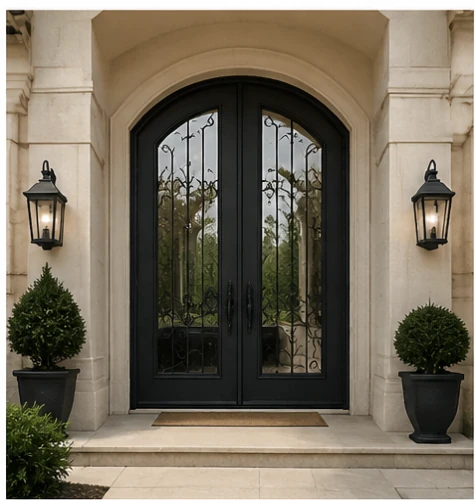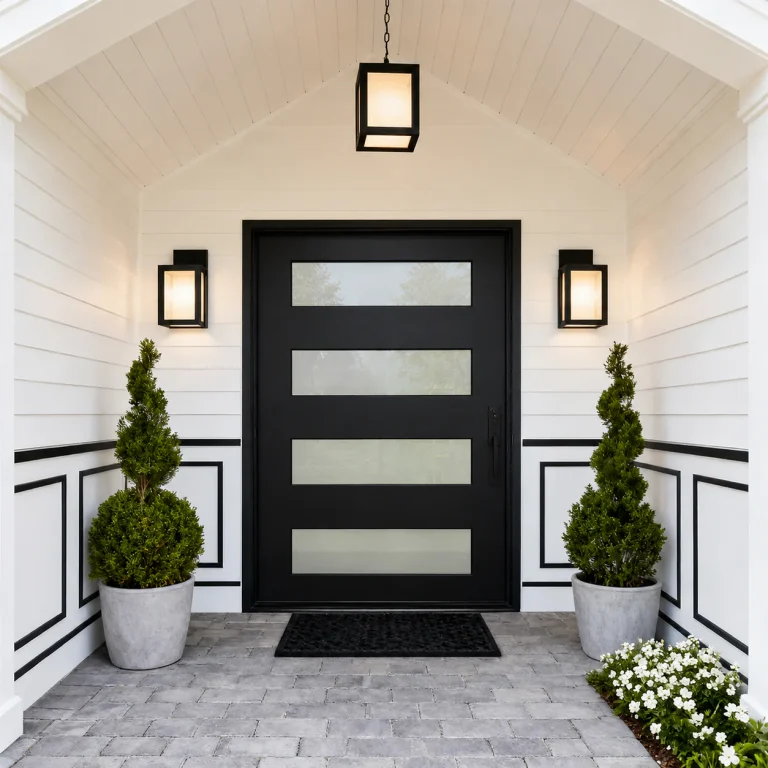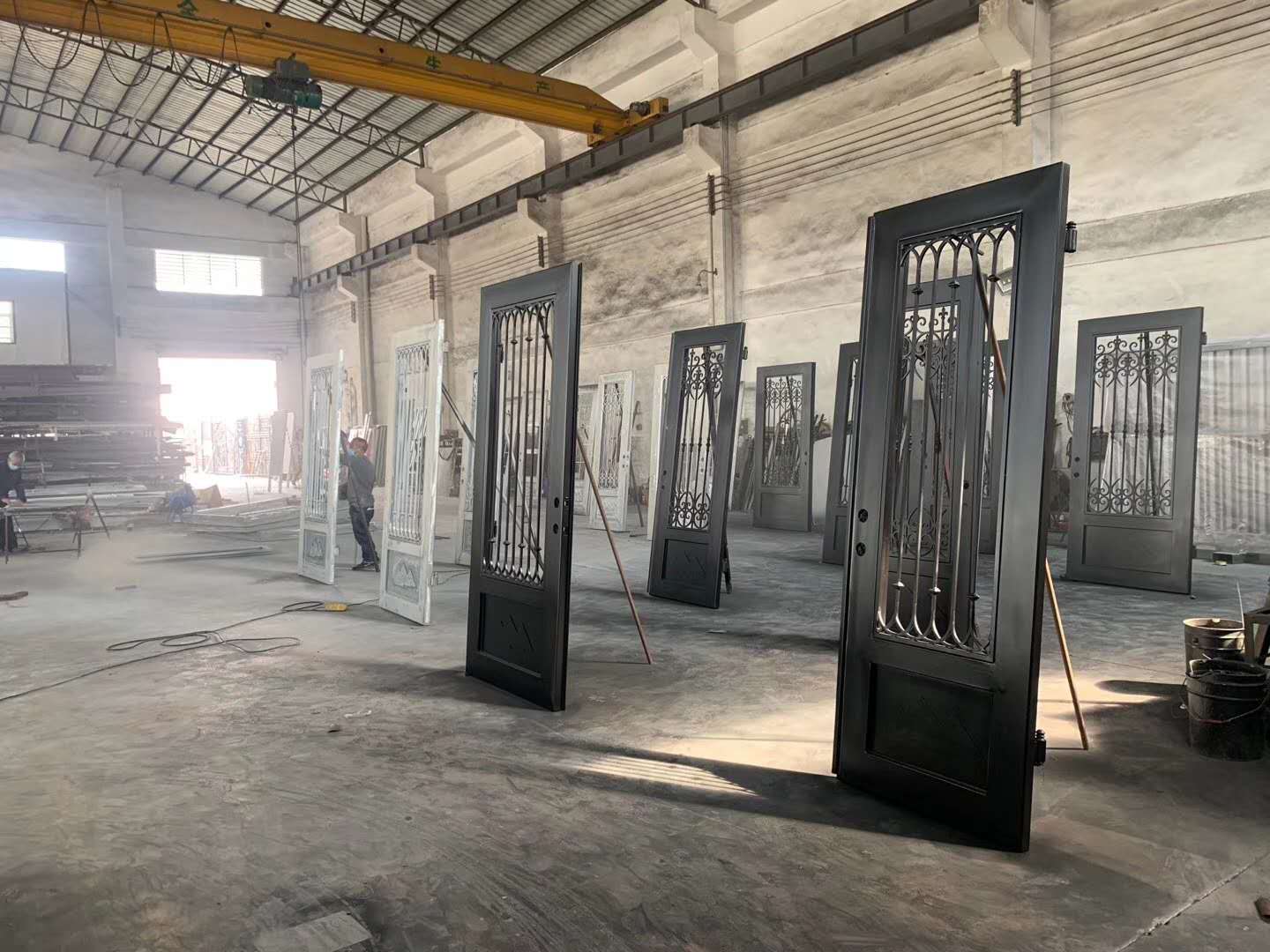
Custom iron entry doors are architectural products, but their quality is determined long before they reach a building site. Accurate steel preparation, controlled fabrication, careful surface work, and final inspection all influence how a door looks, fits, and performs.
At LONGBONDOOR, each project moves through a structured production sequence. The exact details vary by door size, design, glazing, finish, and hardware specification, but the following nine stages show the core workflow used to turn raw steel into a finished custom entrance system.
1. Cutting the Steel Components
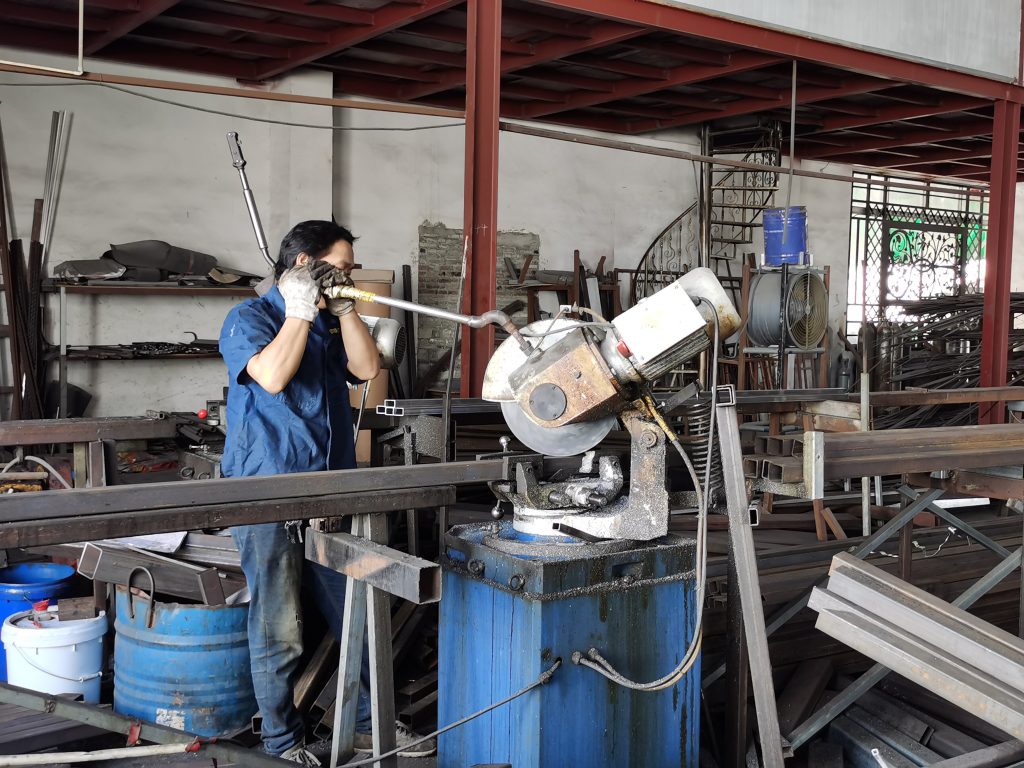
Production begins by preparing steel profiles and plates according to the approved drawings. Components are measured and cut for the outer frame, door leaf, internal structure, decorative elements, and other specified parts.
Accuracy at this stage matters because every later operation depends on the dimensions established here. Consistent cuts help the frame remain square and reduce unnecessary correction during assembly.
2. Forging Decorative Ironwork
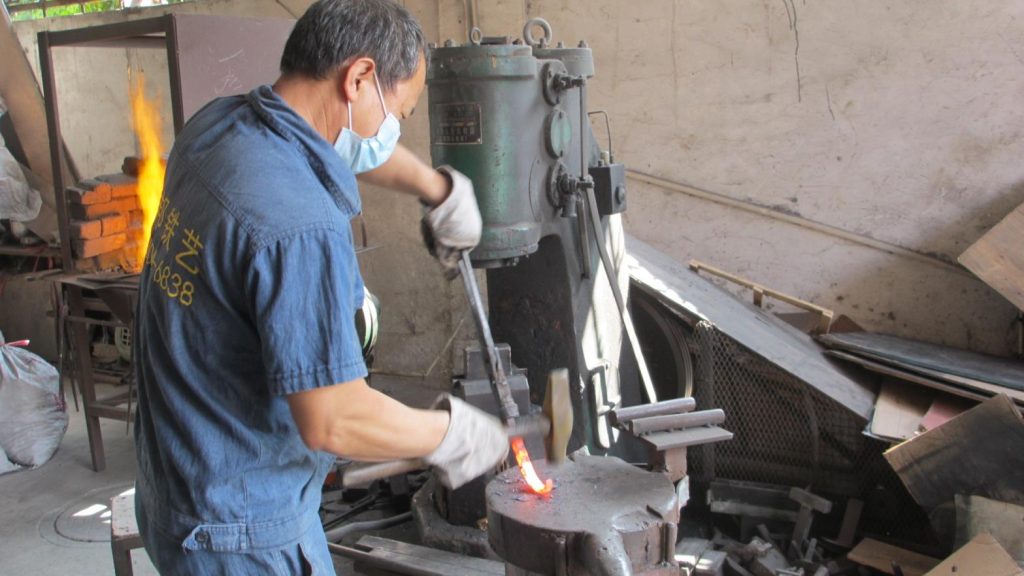
For designs that include scrolls, leaves, curves, or other ornamental features, selected steel pieces are heated and shaped by forging. The process allows straight material to be formed into three-dimensional decorative elements with a handcrafted character.
Forged details are produced to follow the approved pattern. This helps maintain visual balance across paired door leaves, sidelights, and transoms.
3. Welding the Door Structure
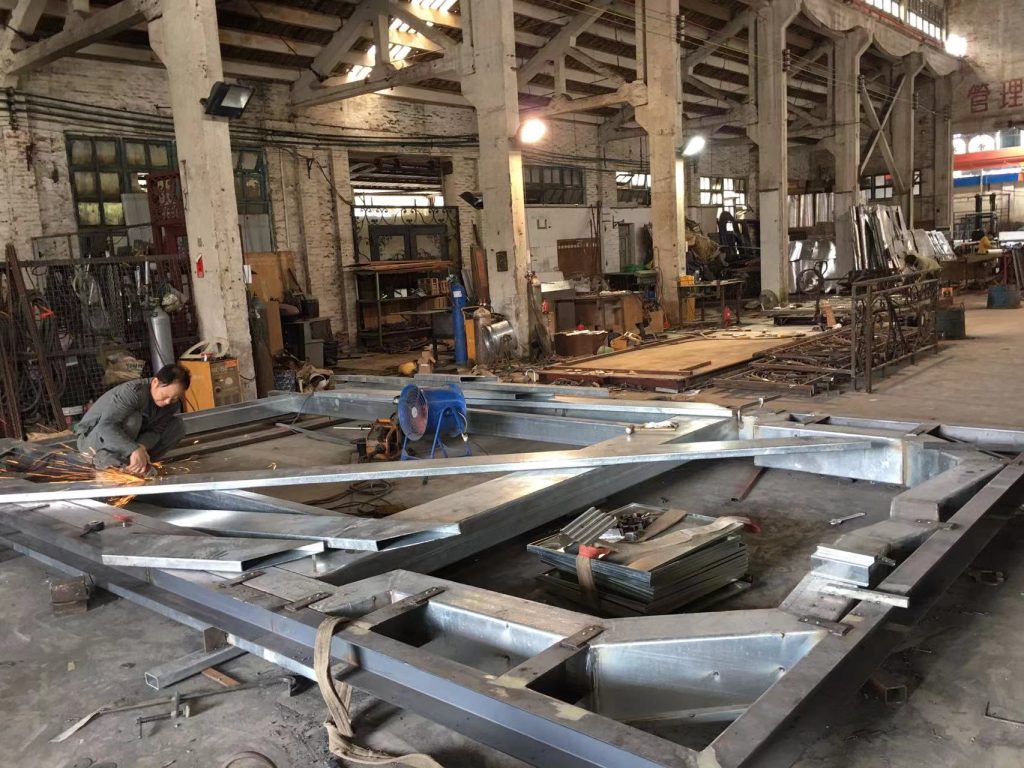
Cut components are positioned, checked, and welded into the main frame and door-leaf assemblies. Decorative ironwork is then integrated with the structural members according to the design.
During fabrication, the team checks alignment, diagonals, joint positions, and overall geometry. For oversized or double-door systems, controlling distortion is especially important because small deviations can affect the meeting stiles, hardware alignment, and installation clearances.
4. Grinding and Polishing
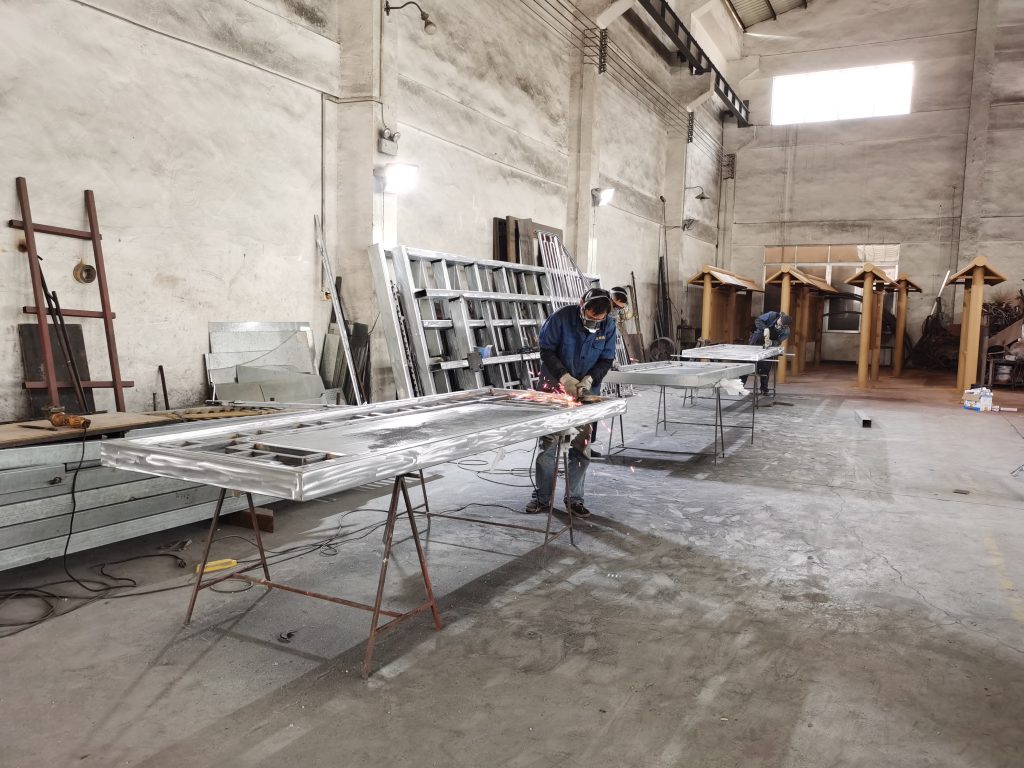
After welding, visible joints and metal surfaces are ground and refined. Sharp edges, weld spatter, and uneven transitions are addressed before the coating process begins.
This stage is not simply cosmetic. A clean, consistent surface provides a better foundation for the following preparation and finishing steps, while careful edge work improves the visual quality of the completed door.
5. Injecting Insulating Foam
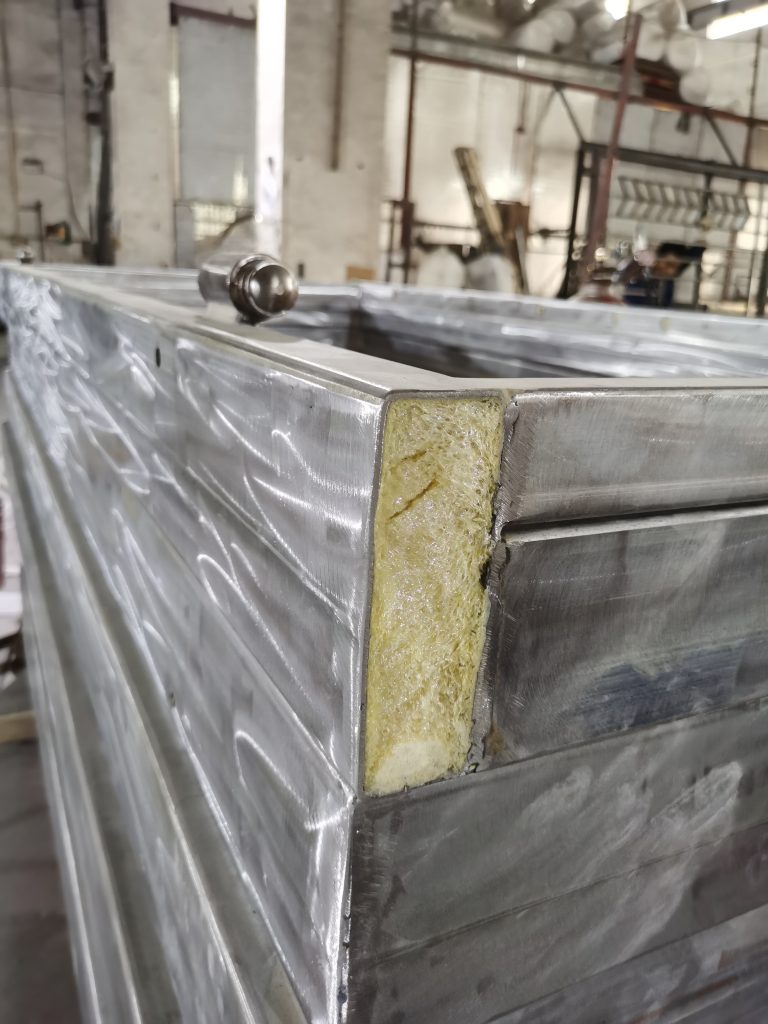
Where the specified door construction requires it, internal cavities are filled with insulating foam. The foam occupies spaces inside the steel assembly that would otherwise remain hollow.
The final thermal and acoustic performance of a complete entrance depends on the full configuration—including the steel construction, glazing, seals, threshold, and installation—but the insulated core is an important part of the overall system.
6. Filling and Surface Preparation
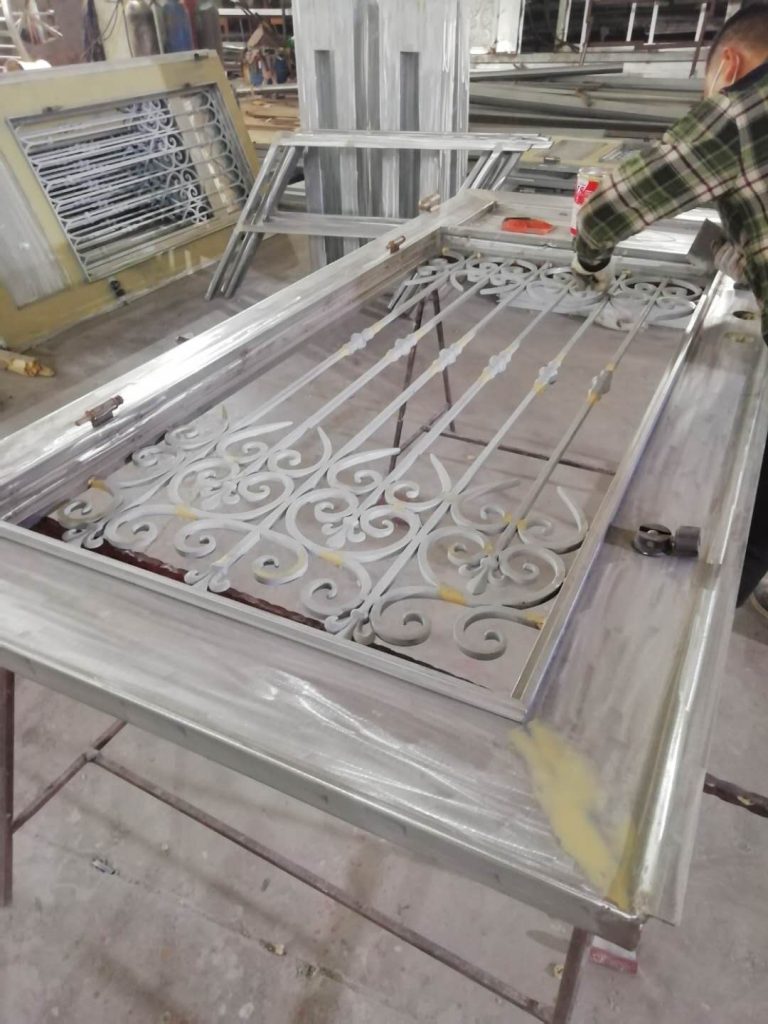
The fabricated door is inspected for minor surface irregularities. Appropriate filling material is applied where necessary, followed by sanding and further refinement.
The goal is to create a uniform substrate for coating without erasing the intended handcrafted details. Corners, decorative junctions, and broad frame surfaces all require careful attention because imperfections may become more visible after the final finish is applied.
7. Painting and Finishing
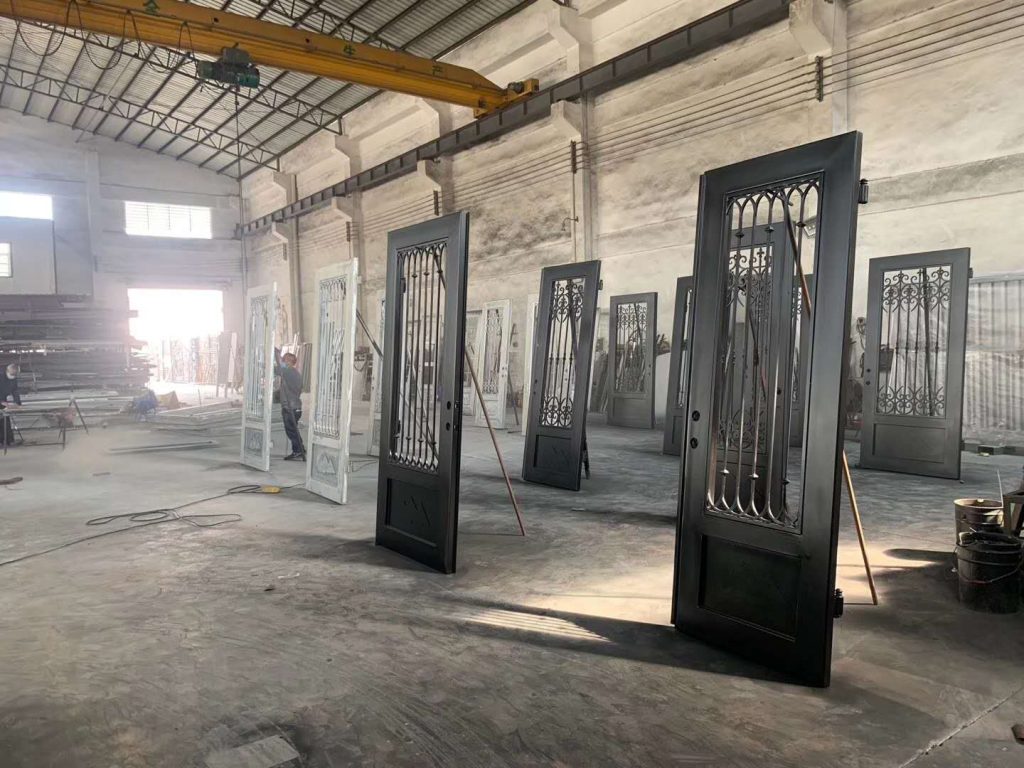
Once preparation is complete, the doors move to the coating stage. The specified finish is applied in a controlled sequence appropriate to the project and selected color.
Finish selection affects both appearance and maintenance expectations. Matte black, bronze-inspired tones, aged effects, and other architectural colors can each change how the same ironwork reads against stone, stucco, brick, or contemporary cladding.
8. Assembly, Adjustment, and Testing
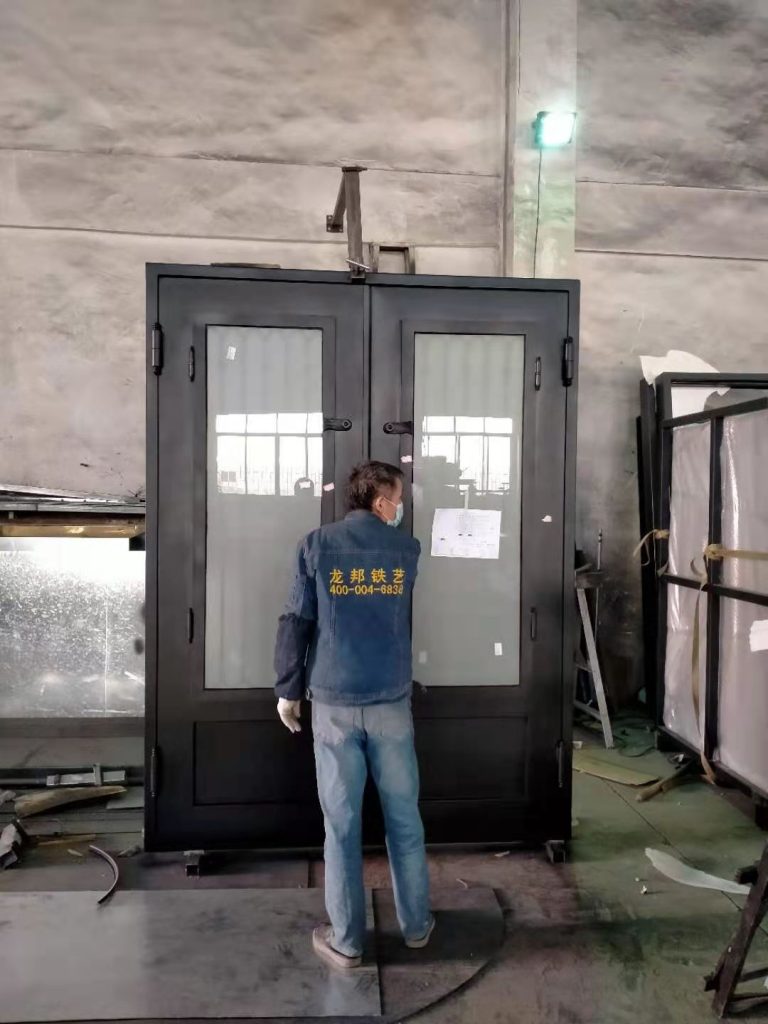
Before packing, the completed door system is assembled or positioned for inspection and adjustment. The team checks door-leaf operation, clearances, hinges, locks, handles, alignment, and other project-specific hardware.
For double doors, the relationship between the active and inactive leaves receives particular attention. Testing before shipment helps identify adjustment needs while the door remains in the factory environment.
9. Protective Packaging and Transportation
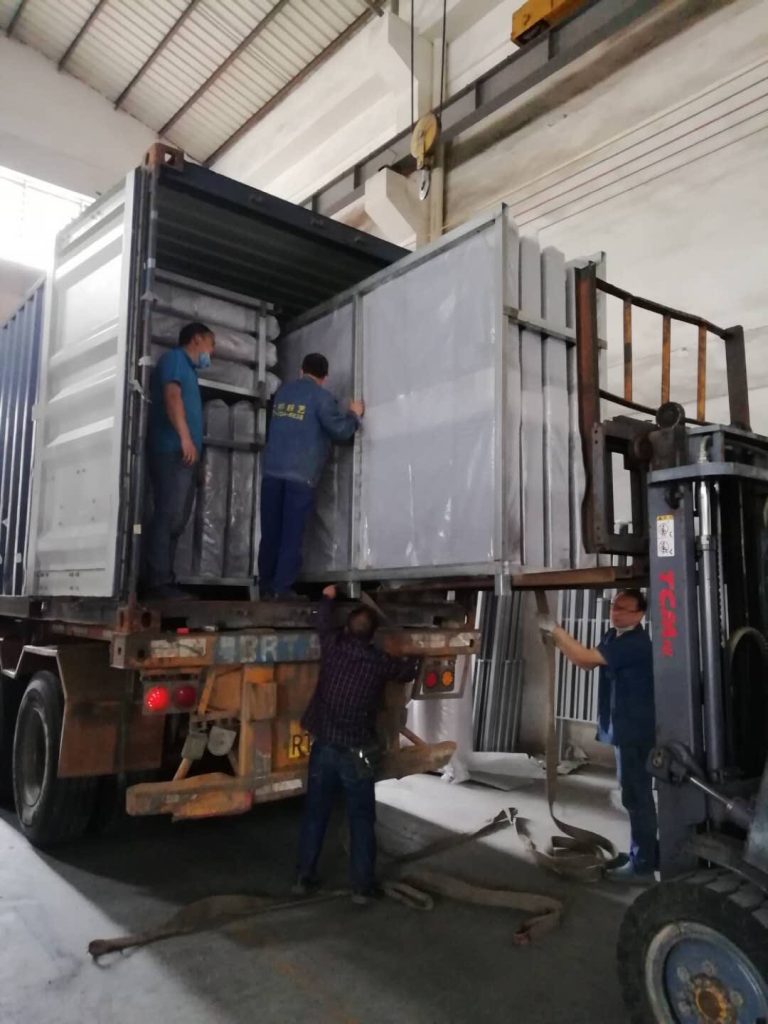
Finished doors are protected for handling and international transportation. Frames, door leaves, glass, hardware, and accessories are secured according to the shipment plan, with protective materials used around vulnerable surfaces and edges.
Clear package identification is useful for projects containing multiple openings. It helps receiving and installation teams match components to the correct door location when the shipment reaches the site.
What Buyers Should Confirm Before Production
A disciplined factory process works best when the project information is clear before fabrication begins. Architects, builders, dealers, and homeowners should confirm:
- Finished opening dimensions and wall conditions
- Door configuration and handing
- Frame, threshold, and installation requirements
- Glass type and privacy level
- Lock, handle, and access-control preparation
- Finish color and visual effect
- Applicable project standards and documentation needs
- Packaging, labeling, and delivery requirements
From Drawing to Finished Entrance
A custom iron door is the result of many connected decisions. Cutting accuracy affects fabrication; fabrication affects fit; surface preparation affects finish quality; and final adjustment affects installation readiness.
By reviewing each stage as part of one controlled workflow, project teams can move from an architectural concept to a finished entrance with clearer expectations and fewer avoidable surprises.
Planning a custom iron entry door project? Send LONGBONDOOR your drawings, opening sizes, reference images, glass requirements, finish direction, and hardware preferences. Our team can review the specification and prepare a project-specific quotation.